
The Jade Emperor
Yuhuang Dadi — The Celestial Administrator of the Universe (玉皇)
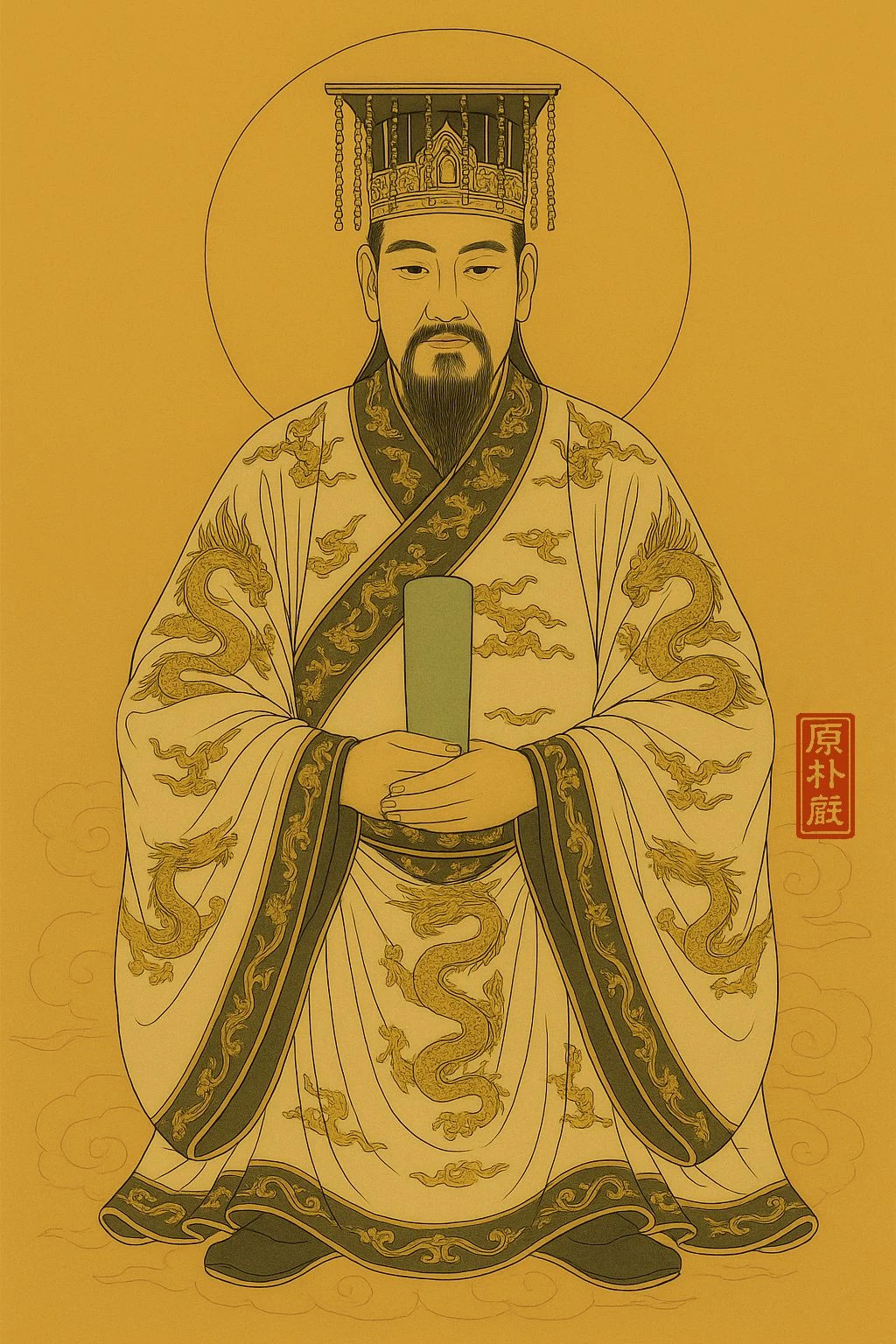
Introduction
In the Taoist tradition, the Jade Emperor is not a creator god and not a distant moral judge. He is the supreme administrator of the manifested universe —the head of the Celestial Bureaucracy, where all forces, spirits, and officials are organized.
Above him stand the Three Pure Ones as primordial principles of the Tao. The Jade Emperor implements their order within time, space, and destiny.
Who the Jade Emperor Is
The Jade Emperor represents:
- the lawful structure of Heaven
- clear hierarchy and responsibility
- impartial judgment based on cause and effect
- harmony between celestial offices, earthly realms, and the world of spirits
He is the point where the abstract order of the Tao becomes the structured, governed cosmos.
Who He Is Not
To avoid misunderstanding, temple teaching clarifies:
- He is not the source of the Tao
- He is not jealous or possessive
- He does not demand blind worship
- He does not erase karmic consequences out of emotion
He functions as a just ruler, ensuring that petitions, merits, and transgressions are processed through proper celestial channels.

Symbolism of the Jade Emperor
Traditional symbols associated with Yuhuang Dadi:
- the Jade Seal — authority and legitimacy
- the Dragon Throne — command over order
- the Heavenly Crown — sovereignty over celestial offices
- the Golden Robe — pure yang clarity
- the Northern Star Axis — the stable center around which the cosmos is governed
Color associations:
- gold, deep red, and imperial yellow
Direction:
- the celestial center
Festival Dates
The Jade Emperor is honored during major cosmic transitions.
Heaven’s Official Birthday — 9th day of the 1st lunar month
This is the primary festival associated with the Jade Emperor.
Symbolizes:
- alignment with Heaven
- renewal of order
- formal petitions to the celestial government
New Year Ceremonies
Honored at the beginning of the year as the administrator who oversees the unfolding of destiny.
Major Seasonal Transitions
He is acknowledged in ceremonies where cosmic order shifts and new cycles begin.
Traditional Offerings
Offerings to the Jade Emperor emphasize dignity, clarity, and respect:
- clear water
- first incense of the ceremony
- simple fruits (pear, apple, mandarin)
- a clean candle
- written petitions presented with sincerity
No theatrical displays are required — only purity and formality.
How the Jade Emperor Assists Practitioners
The Jade Emperor does not intervene emotionally. His influence is structural, guiding:
- order in one’s life
- responsibility in choices
- clarity in moral direction
- protection from chaotic forces
- alignment with cosmic law
- respect for hierarchy and natural consequences
He helps practitioners organize their inner world the way he organizes the cosmos.
In Temple Practice
Within the Temple of Original Simplicity, the Jade Emperor is honored:
- during the New Year rites
- in ceremonies of protection
- when petitions must be formally presented
- at moments when destiny shifts
His presence is felt as:
- inner uprightness
- calm seriousness
- a sense of structure
- trust in cosmic order
He is not invoked emotionally but respected as a strict yet just ruler.
Closing Reflection
The Jade Emperor embodies the truth that the Tao expresses itself not only in silence and emptiness, but also in clear structure, responsibility, and rightful order.
To honor him is to honor the integrity of one’s own actions.